- Your cart is empty
- Continue Shopping

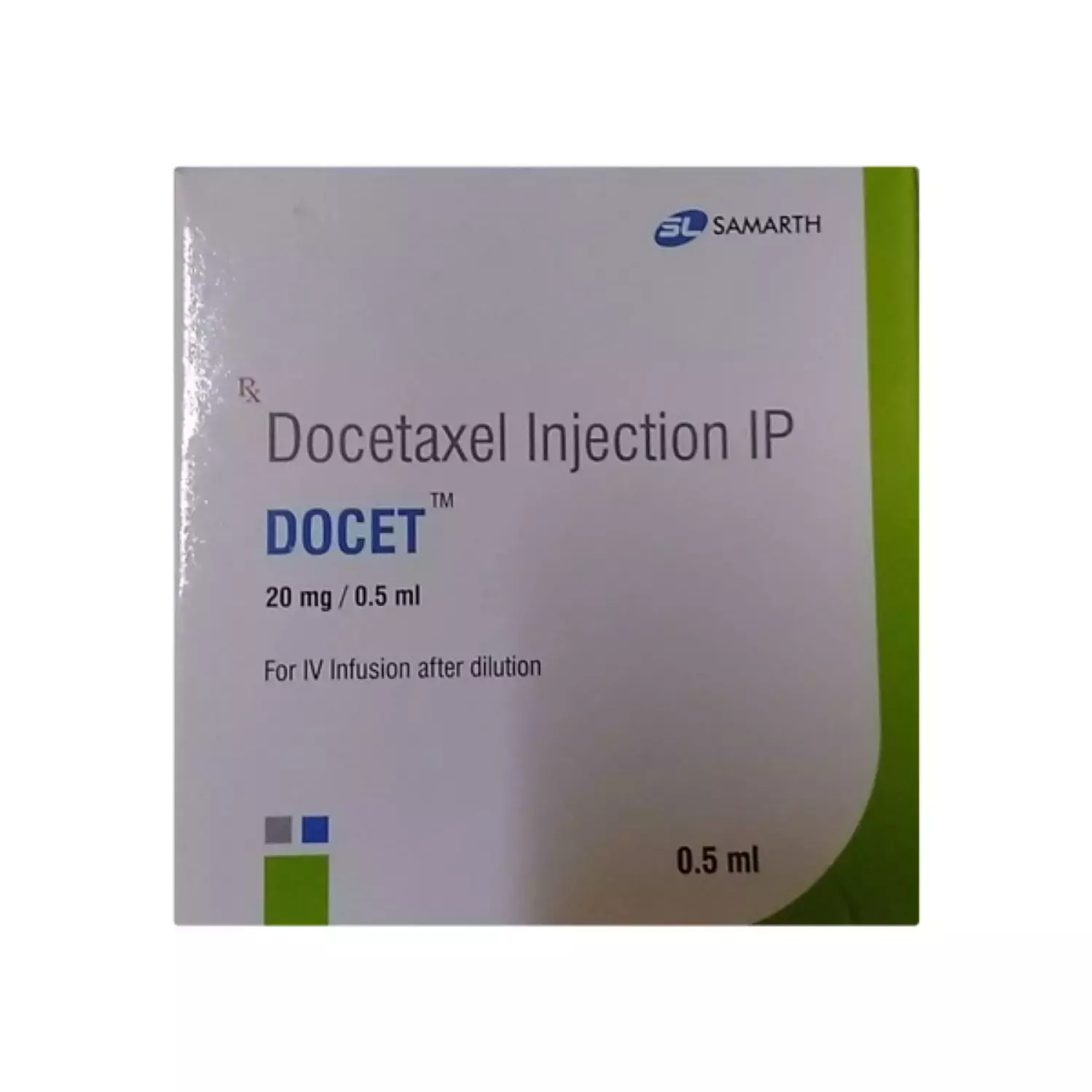
₹2,729.81
| 1+ pcs |
|---|
Docet 20mg Injection may be used in the treatment of:
Docet 20mg Injection contains Docetaxel 20mg, an anti-cancer medicine belonging to the taxane group. It is used as part of chemotherapy for certain types of cancer, including breast cancer, non-small-cell lung cancer, prostate cancer, and cancers of the head and neck. Depending on the cancer and treatment plan, docetaxel may be used alone or together with other anti-cancer medicines.
Docet 20mg Injection is administered intravenously by a qualified healthcare professional in a hospital or clinic. The dose and treatment schedule are determined by the oncologist according to the type and stage of cancer, body surface area, overall health and response to treatment.
Docet 20mg Injection may be used in the treatment of:
Docetaxel may be administered alone or in combination with other chemotherapy medicines depending on the cancer being treated.
The purpose of treatment is to slow or stop the growth and spread of cancer cells and, depending on the treatment setting, reduce tumour burden, control disease or improve treatment outcomes.
Docetaxel can cause side effects because chemotherapy may also affect some healthy, rapidly dividing cells. Common side effects can include:
Contact your doctor immediately if you develop fever, chills, sore throat, unusual bleeding or bruising, severe skin reactions, breathing difficulty, severe swelling, vision changes, or symptoms of a serious allergic reaction. Docetaxel can cause significant reduction in blood cells and serious hypersensitivity reactions.
If you cannot attend a scheduled chemotherapy appointment, contact your oncology team rather than attempting to adjust the treatment yourself.
Docet 20mg contains docetaxel, a taxane chemotherapy medicine that acts on microtubules, structures that cancer cells need during cell division.
Docetaxel stabilizes microtubules and interferes with their normal breakdown. This disrupts the process of cell division and prevents rapidly multiplying cancer cells from continuing to grow and divide. This helps slow or stop the growth of susceptible cancer cells.
Blood counts: Docetaxel can significantly reduce white blood cells and other blood cells. Your doctor will perform regular blood tests before and during treatment. Report fever, chills, sore throat or other signs of infection immediately.
Allergy: Serious hypersensitivity reactions, including severe allergic reactions, can occur. Tell your doctor if you have previously experienced an allergy to docetaxel or related medicines.
Liver disease: Tell your doctor if you have liver disease or abnormal liver-function tests. Liver problems can increase the risk of serious docetaxel-related toxicity.
Fluid retention: Docetaxel can cause fluid retention and swelling. Your oncology team may use steroid premedication and monitor you during treatment.
Pregnancy: Docetaxel can harm an unborn baby. Inform your doctor immediately if you are pregnant or think you may be pregnant. Appropriate contraception should be discussed with your oncology team during treatment.
Breastfeeding: Breastfeeding is generally not recommended during docetaxel treatment and for the period specified by your treating doctor.
Other medicines: Tell your oncologist about all prescription medicines, supplements and other treatments you are taking. Drug interactions can affect the safety and effectiveness of chemotherapy.
Driving: Docetaxel treatment may cause tiredness, dizziness or other symptoms that can affect alertness. Avoid driving or operating machinery if you feel impaired.
Storage: Docet 20mg Injection should be stored in a refrigerator at 2°C–8°C and should not be frozen. Proper cold-chain handling is important.
Important: Docet 20mg Injection is a cytotoxic chemotherapy medicine and must be handled and administered by appropriately trained healthcare professionals. The dose should never be changed or repeated without the oncologist’s instruction.
Disclaimer: This information is provided for educational purposes only and does not replace professional medical advice, diagnosis or treatment. Docet 20mg Injection should be used strictly according to the prescription and treatment plan provided by your oncologist.




Reviews
There are no reviews yet.