



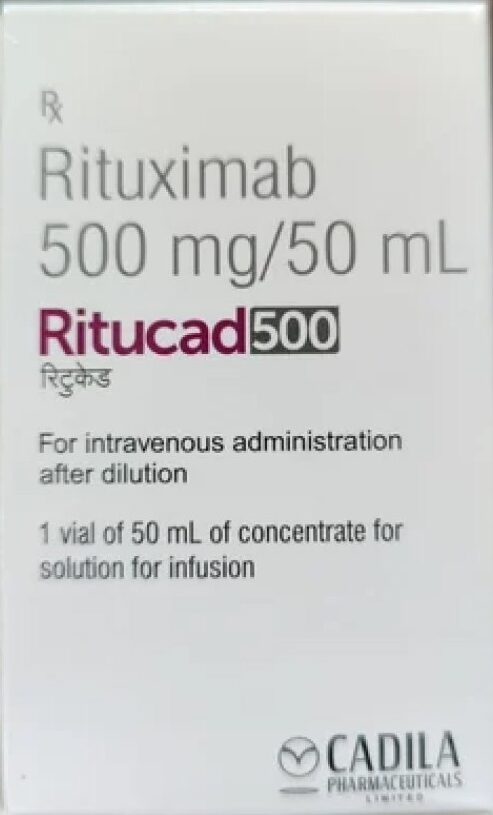
Ritucad 500mg Injection
Uses of Ritucad 500mg Injection
- Non-hodgkin’s lymphoma (NHL)
- Chronic lymphocytic leukemia (CLL)
- Rheumatoid Arthritis
- Granulomatosis with polyangiitis or microscopic polyangiitis
- Pemphigus vulgaris
Introduction Of Ritucad 500mg Injection
Ritucad 500mg Injection contains the active constituent rituximab. It is used for several different disease conditions in adults. It is used alone or with other medications to treat non-hodgkin’s lymphoma and chronic lymphocytic leukemia (a most common form of cancer that affects B-cells). It is also indicated to treat moderate-to-severe rheumatoid arthritis in combination with methotrexate in adults.
Other uses include granulomatosis with polyangiitis or microscopic polyangiitis in adults and children 2 years of age and older. It is also used to treat moderate to severe pemphigus vulgaris (an autoimmune condition that causes painful blisters on the skin and lining of the mouth, throat, nose, and genitals.
Common side effects of Ritucad 500mg injection include infection of the blood, reduced red blood cells, dizziness, swelling in the face and body, itchy skin, diarrhea, increased sweating, and low or high blood pressure. Use effective contraceptives during the treatment and 12 months after the last dose if you can get pregnant. This medicine may cause severe infusion reactions during or within 24 hours after administration. Inform your physician or healthcare professional if you face any infusion reactions, such as increased blood pressure, chest pain, headache, breathing difficulties, vomiting, skin rashes, or throat swelling.
Therapeutic Effects of Ritucad 500mg Injection
Ritucad 500mg is a monoclonal antibody that targets the antigen CD20 expressed on the cell surface of B-lymphocytes (a type of white blood cells). When this medicine binds to the B-cell, it induces cell death in NHL and CLL. The binding action blocks cell activation and growth and cause anticancer effects. It inhibits rheumatoid factor production, antigen presentation, T-cell activation, and proinflammatory cytokine production in rheumatoid arthritis.
Interaction of Ritucad 500mg Injection with other drugs
Inform your healthcare provider about all the medicines you take, including prescription medications, over-the-counter medications, nutritional and vitamin supplements, and herbal products. In particular, tell your doctor if you are taking medicines for blood pressure or other heart conditions. Certain medications may interact with Ritucad 500mg injection and reduce its effectiveness by causing undesirable side effects.
More Information about Ritucad 500mg Injection
- Store Ritucad 500mg injection in the refrigerator (2°C to 8°C)
- Do not freeze
- keep the injection away from the reach of children and pets.
- If you have missed any dosing appointments, inform your doctor and schedule immediately.
How to consume Ritucad 500mg Injection
It should only be administered by a trained doctor or nurse. Do not self-administer the injection. Before giving Ritucad 500mg injection, you will be given other medications (pre-medication) to reduce the possible side effects. Your doctor will decide the dose and duration of your treatment based on the disease severity and other factors. It will be given as an intravenous infusion, and you will be monitored carefully for any unwanted side effects.
Safety Advices for Ritucad 500mg Injection
Pregnancy
Consult your doctor
Ritucad 500mg is unsafe to administer in pregnant women because it may affect the fetus.
Breast Feeding
Consult your doctor
Breastfeeding is not recommended in patients taking Ritucad because the medicine passes into the breast milk in small amounts and may harm your baby.
Lungs
Consult your doctor
It is unknown whether Ritucad can be used in patients with lung disorders.
Liver
Consult your doctor
Whether Ritucad 500mg injection can be used in patients with liver impairment is unknown.
Alcohol
Unsafe
Consuming alcohol may affect the effectiveness of Ritucad 500mg injection. Stop consuming alcohol if you are taking this medicine.
Driving
Consult your doctor
Caution is required while driving and operating machinery when you take Ritucad 500mg injection because it may cause dizziness, sleepiness, tiredness, and risk of falling.
Side Effects of Ritucad 500mg Injection
Common
- Swelling in the face and body
- Diarrhea and nausea
- Itchy skin
- Anemia
- Muscle spasm
- Headache
- Urinary tract infection
- Fever, chills, and shivering
- Inflammation of nasal cavities
- Cough, sore throat
- Loss of hair
Serious
- Increased or decreased blood pressure
- Chest pain
- Hypersensitivity reactions
- Hepatitis B viral infection
- Memory loss, trouble thinking, difficulty in walking
Brand
Cadila Pharmaceuticals Ltd
Related products


Es-omepraz -DSR Capsule
Domperidone, Esomeprazole
₹57.50Current price is: ₹57.50. Original price was: ₹115.00.

Pantosec Dsr Capsules
Pantoprazole , Domperidone
₹75.86Current price is: ₹75.86. Original price was: ₹151.73.
Reviews
There are no reviews yet.